KADODE
How KADODE built a Japanese incense store on Framer with Frameship
The question isn't really which tool to use - it's where you want control and where you're okay letting go.

Takumi
Founder, KADODE
2
Months from decision to launch
0
Developers involved
1
Founder running everything

KADODE
KADODE is a Japanese lifestyle and incense brand that captures the beauty of Japan’s nature and culture, creating refined sensory experiences to share with people around the world.
Lifestyle & Fragrance
Japan
Framer + Shopify + Frameship
A Japanese incense brand that chose Frameship for full design control over their Framer ecommerce store.
KADODE is a Japanese incense brand rooted in Karuizawa aesthetics. When it came time to sell online, the founder wanted the same level of intentionality in the digital experience that went into the product itself. Shopify was the obvious choice for commerce, Framer for design and Frameship became the bridge that let both work together without code.
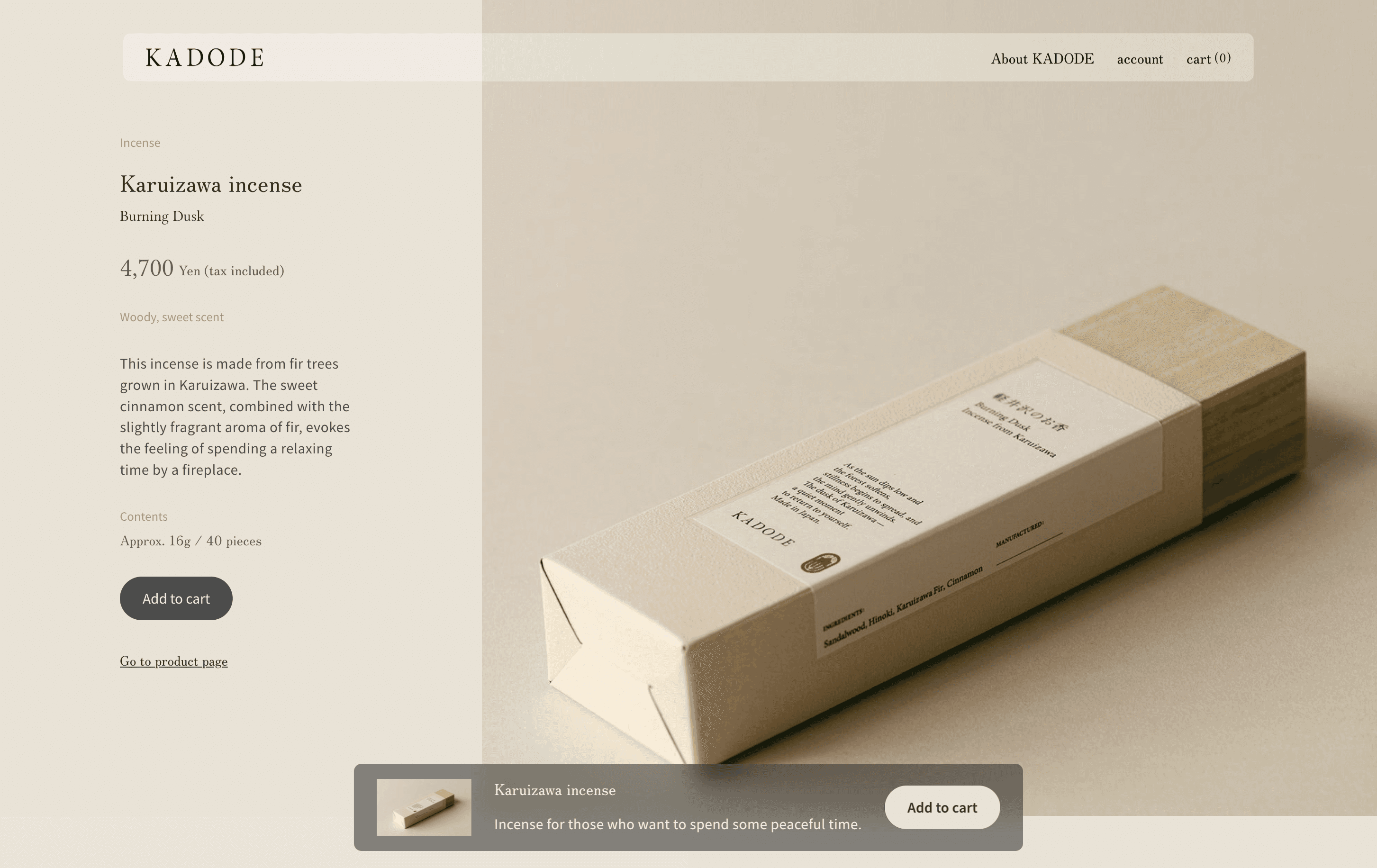
Already in Framer. Shopify was easy. But nothing in between felt right.
Shopify on its own was the obvious path. It's reliable, it handles payments, and it would have been the easiest option. But Takumi had been using Framer for a while and knew he could shape the experience exactly the way KADODE needed it to feel.
The challenge was connecting the two.
He looked at Framer Commerce, which has solid templates and sits close to the official Framer ecosystem. But after weighing the options, Frameship felt like the better fit. The buy-once model and the freedom to build from scratch rather than adapt a template aligned more closely with what KADODE needed.
"Shopify on its own was the obvious choice - and honestly, the easiest one. But I'd been using Framer for a while and knew I could control the experience exactly the way I wanted. The buy-once model and the freedom to build from scratch rather than adapt a template felt more aligned with what KADODE needed." - Takumi, Founder
For a brand built around something as quiet and specific as Japanese incense, a generic Shopify theme wasn't going to carry the identity. And a template, no matter how polished, would always feel like someone else's starting point.
Framer for the experience. Shopify for the transaction. Frameship to connect them.
Frameship is a plugin that connects Shopify to Framer. When opened in Framer, your Shopify products sync directly into Framer CMS. You then design your store pages in Framer as you normally would, dropping in Frameship's pre-built ecommerce components wherever you need them - each one customisable, with the Shopify connection already built in.
For Takumi, the mental model was simple. Framer owns the experience. Shopify owns the transaction. Frameship connects Shopify to Framer and makes the two work as one without writing a line of code.
"What surprised me was how clean the division felt in practice - it was less like building an EC [Ecommerce] site and more like building a website that also happens to sell things." - Takumi
That framing is what made the build feel natural rather than technical. KADODE wasn't trying to become an ecommerce operation. It was a brand that needed a way to sell.
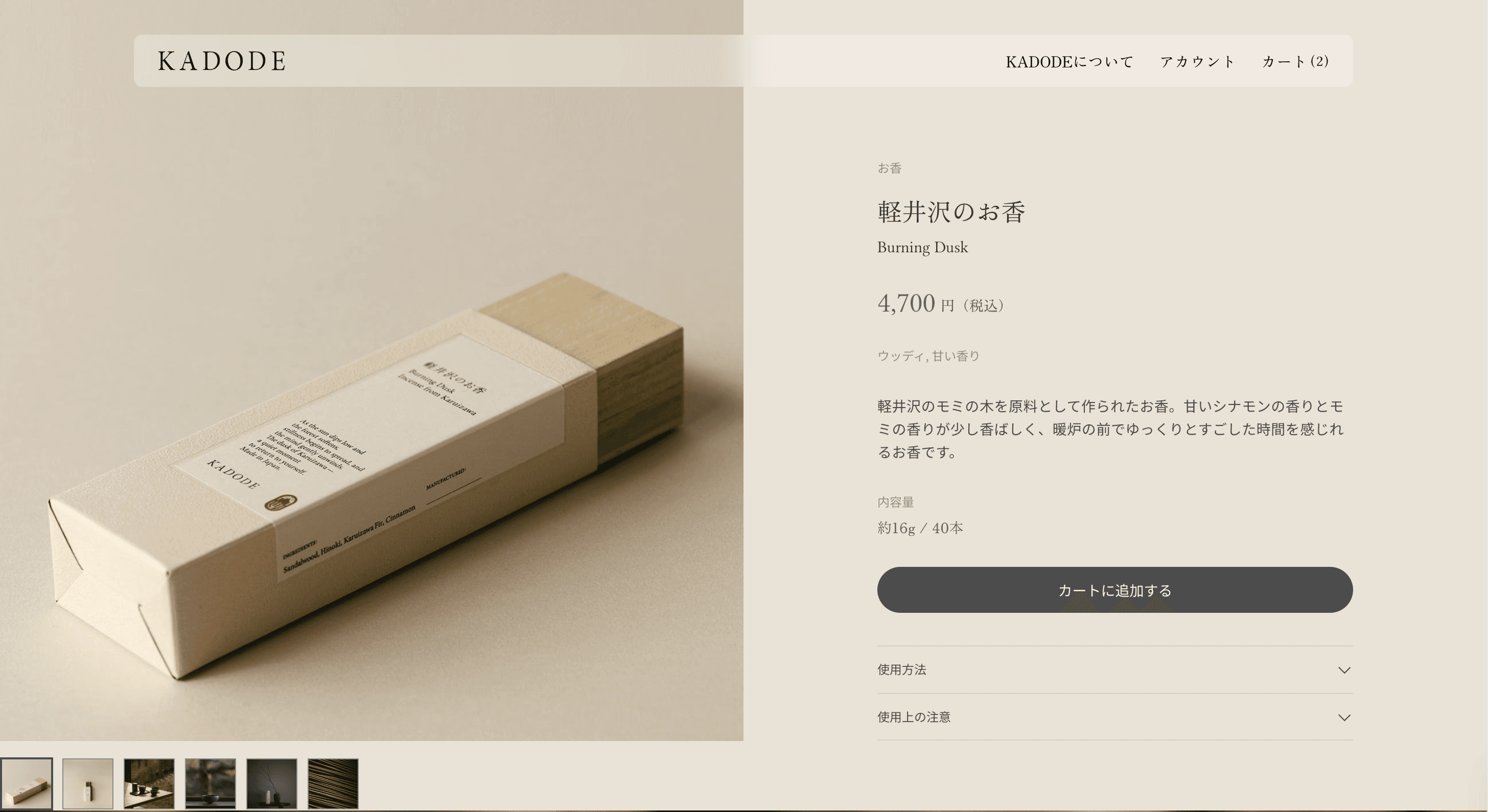
Building a Framer ecommerce store that feels like the brand, not a template.
Takumi handled the design direction and content in Framer. Each Frameship component is a visual design element you drop into Framer and customise - the Shopify connection is already built into the component itself. Products sync from Shopify into the Framer CMS, and the store pages are designed entirely within Framer.
The result is a site that carries the same restraint and intentionality as the product. There's no template underneath. No stock layout adapted to fit. It was built like anything else in Framer.
"Running two systems in parallel does add complexity - there are moments where the seams show, and you have to be intentional about keeping things connected. It's manageable, but worth knowing going in." - Takumi
That honesty is part of what makes the KADODE story worth telling. Frameship doesn't pretend the two-system setup is invisible. But for someone who cares deeply about the front-end experience, the trade-off is worth it.
"The moment that mattered wasn't a number - it was the first order from someone I'd never met. A stranger finding your brand, trusting it enough to buy. For a brand rooted in something as quiet and specific as incense and Japanese aesthetics, that felt like real validation." - Takumi
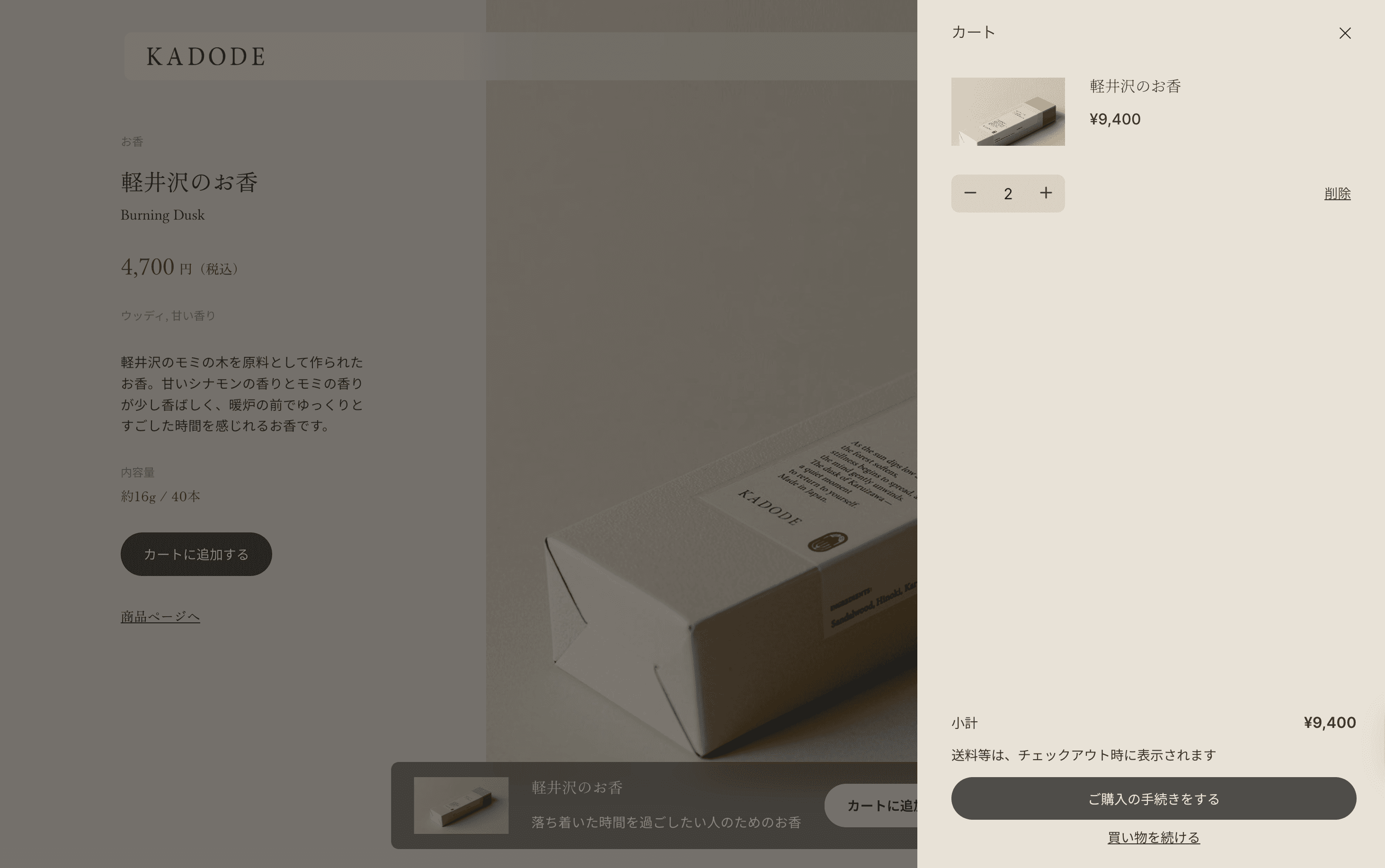
Live, self-managed, and built to last.
Full design control
The Framer Shopify store looks and feels like KADODE, not like a theme with a logo swapped in.
No developer dependency
Takumi manages the site himself. Content updates go through Framer CMS, product and order management through Shopify.
Two months to launch
From first decision to a live store, without rushing. Deliberately paced for a brand still finding its shape.
Built without code
Frameship's components handled the Shopify connection. The design work stayed entirely in Framer.
"The question isn't really which tool to use - it's where you want control and where you're okay letting go. Shopify handles payments, security, and compliance better than I ever could on my own. Frameship lets Framer stay in charge of the experience. If you care deeply about how your site feels - not just how it functions - that separation is worth it." - Takumi, Founder, KADODE


